Three Munich parkrun events now take place every Saturday morning, drawing a combined field of more than 400 runners and walkers across the city's green corridors. The numbers have climbed steadily since the global parkrun network expanded its German footprint, and local fitness coordinators say registrations at Munich events jumped roughly 30 percent between January and June 2026 alone. You do not need to enter in advance, pay a fee, or hit a qualifying time. You just show up.
The timing matters. Europe's long winters compress outdoor activity into a short seasonal window, and Munich residents — already accustomed to using the English Garden and the Isar riverbanks for daily runs — are hunting for structured weekend events that do not cost anything. With gym memberships at established chains like McFit averaging around €25 a month and boutique studios in Schwabing charging upwards of €180 for a ten-class pass, a free 5-kilometre timed run has an obvious appeal. Hormones, sleep quality, and cardiovascular health are all topics generating more reader interest than at almost any point in the past decade, and the low barrier to entry of parkrun makes it a realistic weekly habit rather than a resolution that fades by February.
The Three Courses, Ranked by Terrain
The Englischer Garten parkrun is the city's flagship event. Runners gather at the Kleinhesseloher See, the lake at the garden's northern end, every Saturday at 9 a.m. The course is predominantly flat, looping around the lake and through tree-lined paths, which makes it the friendliest option for beginners or anyone returning from injury. The U3 and U6 lines stop at Münchner Freiheit, a ten-minute walk from the start. Course records sit at 15 minutes 42 seconds for men and 18 minutes 11 seconds for women, a sign that serious club runners treat it as a genuine time trial.
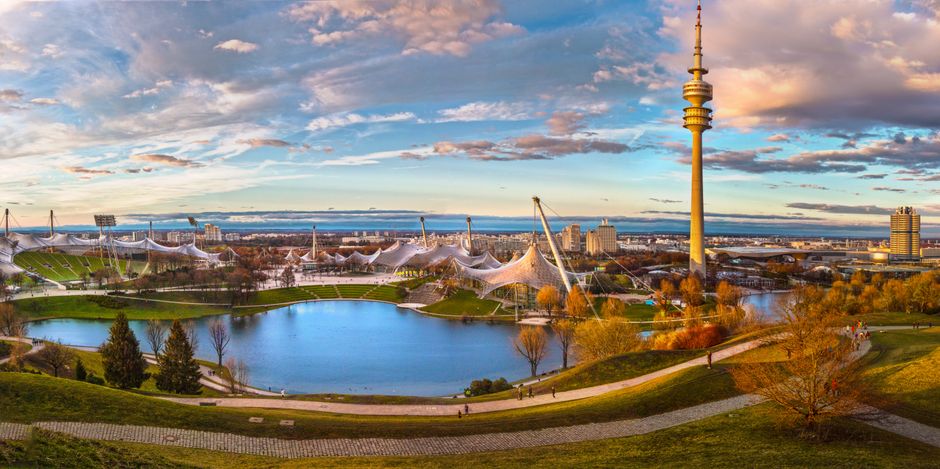
The Olympiapark parkrun, launched in March 2025, uses the sloping paths around the Olympiasee and the stadium grounds in the Milbertshofen district. The course includes one genuine hill — the Olympiaberg, the artificial mound built from Second World War rubble — which pushes average finish times about 90 seconds slower than the English Garden equivalent. Runners who want something more challenging, or who simply want to look up at the 1972 Olympic tower while catching their breath, tend to gravitate here. The U3 to Olympiazentrum drops you at the door.
A third event, newer and smaller, runs inside the Westpark in the Sendling-Westpark neighbourhood, using a two-lap course around the western pond area. Fields here typically number 60 to 80 participants, compared to 180-plus at the English Garden, giving it a more community-feel atmosphere. Parking along Garmischer Strasse is straightforward for those coming from the suburbs.
How to Register and What to Bring
Registration is a one-time process through the parkrun.com website. Once you have a barcode — printed or on your phone — it is valid at any parkrun event worldwide, from the Englischer Garten to Hyde Park in London. Results are posted online by Saturday afternoon, personalised with your finish time, age-grade percentage, and position in your gender category. That data loop, wellness researchers argue, is a significant part of why participants return week after week.
First-time visitors should arrive by 8:50 a.m. for the pre-run briefing, which run directors deliver in both German and English — a practical nod to Munich's large international community. Dogs on leads are welcome at all three courses. Strollers are permitted at Westpark and the Olympiapark but are discouraged on the busier English Garden paths during peak summer attendance.
If you have not run 5 kilometres in years, or ever, the standard advice from sports medicine practices in Munich — including those affiliated with the Klinikum rechts der Isar — is to walk the first event entirely and build from there. Parkrun does not have a minimum pace requirement. The tail walker, a volunteer who finishes last by design, means no one is ever left behind. Show up next Saturday and see what happens.