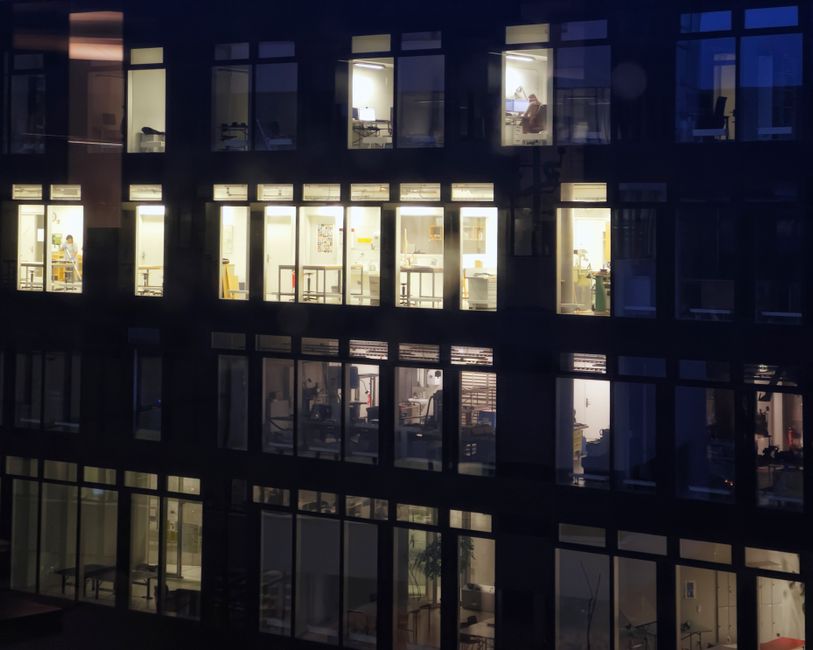
Munich's prime office vacancy rate climbed to 6.8 percent in the second quarter of 2026, up from 4.9 percent a year earlier, according to figures compiled by property consultancy BNP Paribas Real Estate Germany. That number, modest by London or Paris standards, masks something more significant: the tenants who are pulling back are not doing so because Munich's economy is weak. They are doing so because the world outside Bavaria has turned genuinely unpredictable.
The death of Ayatollah Khamenei this week, the continuing leadership vacuum in Tehran, and the knock-on effect on energy futures markets all landed on the desks of Munich's energy-sector occupiers before the funeral crowds had dispersed. Several firms with regional headquarters in the Maxvorstadt and along Leopoldstrasse quietly extended break-clause negotiations on leases due for renewal in the fourth quarter. No decisions have been announced. Decisions rarely are, this quietly.
Schwabing to the Werksviertel: Where the Pressure Shows
The softening is not uniform. The Werksviertel district, east of the Ostbahnhof, remains a relative bright spot. Its creative and tech tenant base — anchored by firms that moved in during the 2021-2023 build-out — skews younger and less exposed to commodity-price swings. Asking rents there still hold around €26 to €28 per square metre per month for quality space. But in the older stock along Landsberger Strasse in Laim, effective rents have drifted below €19 after incentive packages are factored in, a figure brokers describe as the lowest since 2018.
The Highlight Towers on Mies-van-der-Rohe-Weg near Olympiapark, long a benchmark for Munich's top-tier market, still command above €40 per square metre. That ceiling has not moved. What has moved is the time it takes to fill space when a floor becomes vacant: average lease-up periods in the CBD have stretched from roughly four months in early 2025 to closer to seven months today, according to internal tracking shared by CBRE Munich.
Munich Re, headquartered on Königinstrasse, confirmed in its June investor update that it is consolidating two smaller leased offices in the metropolitan area into its main campus rather than renewing those peripheral leases. The firm cited hybrid-working headcounts rather than market pessimism, but the effect on available space is the same regardless of the stated reason.
Global Signals, Local Consequences
The broader picture pressing down on Munich is less about any single event and more about the accumulation of them. Trade friction between Washington and its partners has made US multinationals slower to commit to European expansion plans. Several American technology companies that had shortlisted Munich — competing with Frankfurt and Amsterdam — have deferred final site decisions into 2027, according to three separate advisers working on those mandates. The World Cup tourism boom that has benefited Mexico's hospitality economy this summer has no equivalent commercial-property tailwind for Munich; the city's next major infrastructure moment is the 2028 planned opening of the second S-Bahn trunk line, which property analysts at Colliers Munich say will trigger a rerating of stations along the northern arc from Feldmoching toward the Airport.
New supply is modest but not trivial. The Nove development on Agnes-Pockels-Bogen in Neuhausen-Nymphenburg is scheduled to deliver roughly 18,000 square metres of Grade A space in the first quarter of 2027. Developers are watching pre-letting rates closely; at the time of writing, around 40 percent of the building is under heads of terms, below the 60 percent threshold that lenders have traditionally treated as comfortable.
For occupiers, the practical read is straightforward: landlords who were immovable on rent-free periods eighteen months ago are now willing to negotiate incentive packages worth three to five months on a five-year term. Tenants with lease events in late 2026 or early 2027 have meaningful leverage and should be using it now, before any post-Iran stabilisation or US trade détente tightens sentiment again. Munich's fundamentals — low unemployment, a diversified employer base anchored by BMW, Siemens, and Allianz — have not deteriorated. The opportunity is a window, not a structural shift, and windows in this market have a habit of closing faster than the headlines that opened them.