Wellness
How to Start a Walking Group in Your Neighbourhood
Munich's pavements are built for it — here's your practical guide to turning a solo stroll into a community fixture.
4 min read
Wellness
Munich's pavements are built for it — here's your practical guide to turning a solo stroll into a community fixture.
4 min read
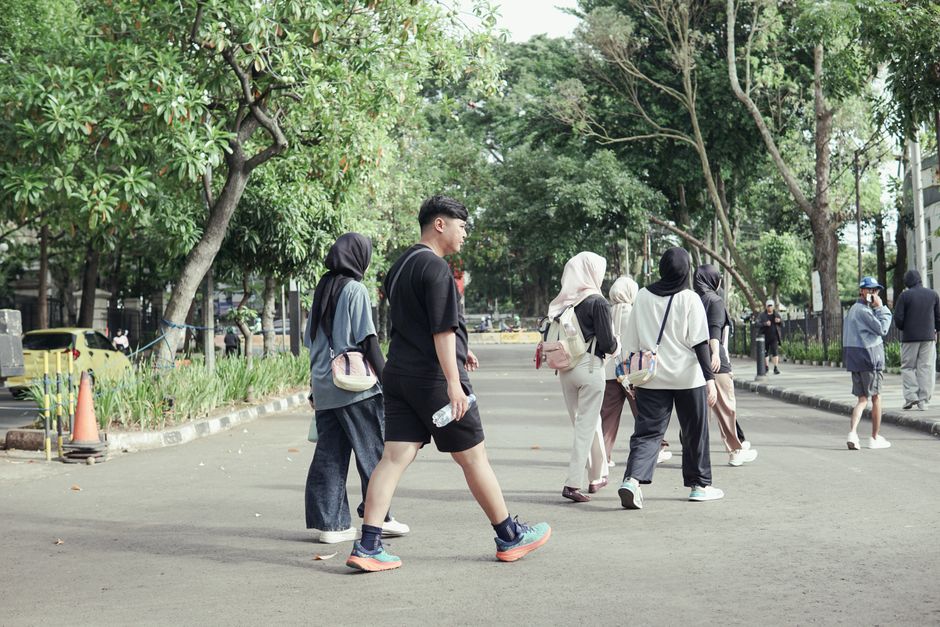
Munich already has more than 700 kilometres of designated cycling and pedestrian paths threading through its 25 districts. Yet community walking groups — the kind that meet every Tuesday morning at a fixed corner and actually show up — remain surprisingly scarce outside the English Garden regulars and a handful of Volkshochschule München courses. Health researchers and local fitness organisers say that gap is an opportunity, not a failure, and that starting one takes less infrastructure than most people assume.
The timing matters. A growing body of evidence links group exercise — as opposed to solo training — to measurably better long-term adherence. A 2023 meta-analysis published in the British Journal of Sports Medicine found participants in socially structured walking programmes maintained activity levels for an average of 14 months, compared with six months for solo walkers given identical step-count targets. That research is increasingly influencing how Munich's municipal health office, the Referat für Gesundheit und Umwelt, designs its public wellness programming for 2026. The office confirmed in June that it is piloting three new neighbourhood movement initiatives across Schwabing-West, Neuhausen-Nymphenburg, and Ramersdorf-Perlach before the end of the third quarter.
Pick a route first, not a date. In Maxvorstadt, the loop from Königsplatz south through the Alter Botanischer Garten and back along Sophienstrasse covers just under three kilometres on flat pavement — manageable for almost any fitness level, well-lit in early mornings, and close enough to U-Bahn lines 2 and 8 that people can join from across the city without driving. Bogenhausen offers a quieter alternative: the riverside path between Friedensengel and the Maximiliansbrücke runs 2.4 kilometres one way and stays largely free of cyclists, which matters when you have a loose group spread across twenty metres of pavement.
Keep the founding group small. Five to eight people is the practical ceiling for a first walk; beyond that, the logistics — pace differences, latecomer management, conversation fragmentation — become a coordination job rather than a leisure activity. Once the group has met four or five times and the route feels embedded, expanding to 15 or 20 is straightforward. The Münchner Volkshochschule, which already runs guided Nordic Walking courses from €48 per five-session block, uses exactly this staging model for new cohorts.
Registration and liability are the questions that stop most people before they start. For informal groups meeting on public paths, neither is legally required in Bavaria as long as no fee is charged. The moment you collect money — even for a shared coffee at the end — you move into a grey zone that Munich's Kreisverwaltungsreferat recommends discussing with a Sportverein umbrella organisation. The BLSV, the Bavarian state sports association based on Georg-Brauchle-Ring, offers free initial consultations to community groups and can connect organisers with existing registered clubs willing to provide legal cover for €30 to €60 per year.
Consistency beats novelty. Groups that fix a single weekly slot — say, 8 a.m. Saturdays at the Ostbahnhof south exit — outperform those that rotate times to accommodate shifting schedules. A WhatsApp group or a free Meetup.com listing handles communication adequately for groups under 30 people; the Meetup platform currently lists 11 active English-language walking groups in Munich, suggesting the appetite is there even among residents who feel less confident in German.
Build in a social anchor. The Viktualienmarkt on Saturdays draws tens of thousands of visitors between 8 a.m. and noon; routing a walk to finish there at 9:30 gives newcomers a reason to commit to the second visit even before they feel socially integrated with the group. Similarly, ending near Café Ruffini on Orffstrasse in Neuhausen — which opens at 9 a.m. on weekends — provides a gentle on-ramp for people who want community but arrived nervous about the exercise part.
The hardest week is week three, not week one. Enthusiasm carries a launch; the third and fourth meetings, once novelty has faded, are where most informal groups dissolve. Experienced Munich organisers suggest designating a second person as a co-host from the first session — someone who sends the reminder message when the founder is travelling, who shows up even when six people cancel. That redundancy, more than any app or route plan, is what turns a one-off walk into a neighbourhood institution. Consult a local GP or sports medicine specialist at a Munich-based practice if you have existing health conditions before setting your pace expectations for the group.
About this article
Published by The Daily Munich
Spread the word
Daily brief
Free, in your inbox before 7am. Weekdays.
The Daily Network — local news across Australia