Wellness
Gut Health 101: Fermented Foods You Can Find Locally
From Viktualienmarkt sauerkraut to Schwabing kefir bars, Munich's fermented food scene is quietly becoming one of the city's most compelling wellness stories.
4 min read
Updated 3 h ago
Wellness
From Viktualienmarkt sauerkraut to Schwabing kefir bars, Munich's fermented food scene is quietly becoming one of the city's most compelling wellness stories.
4 min read
Updated 3 h ago
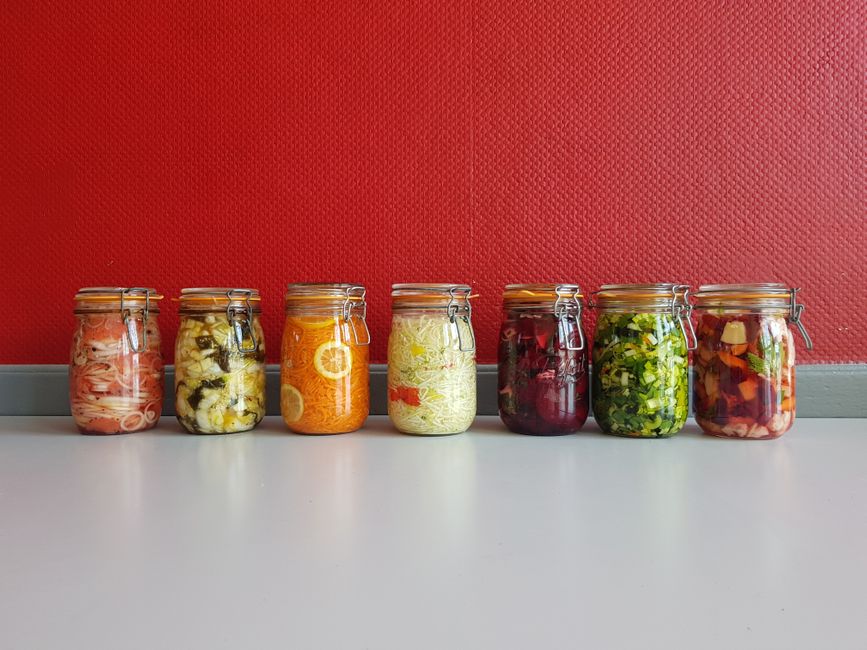
Fermented foods are back on Munich's shelves — and this time, the science is catching up with the tradition. Gut microbiome research published in the journal Cell in late 2021 demonstrated that a diet rich in fermented foods increased microbiome diversity and reduced markers of inflammation in just ten weeks. Three years on, that finding has filtered into mainstream wellness culture, and Munich's food vendors, natural grocers and neighbourhood cafés are feeling the commercial impact.
The timing matters. Across Europe, spending on functional foods — products marketed for a specific health benefit beyond basic nutrition — is forecast to reach €27 billion by 2027, according to Euromonitor International. Fermented products are driving a significant share of that growth. Munich, with its deep Bavarian food culture and a health-conscious population that already logs some of the highest per-capita gym membership rates in Germany, is fertile ground.
Sauerkraut is the obvious starting point, and nobody does it better locally than the stall run by Hofmann Gemüse at the Viktualienmarkt, where traditionally lacto-fermented varieties — no vinegar shortcut — have been sold for years. The difference matters: only the slow, salt-driven lactic acid fermentation preserves the live Lactobacillus cultures that benefit gut health. A 500-gram jar runs around €4.50. The vendors there also occasionally stock fermented beetroot and kohlrabi, both high in prebiotic fibre that feeds beneficial gut bacteria.
For kefir — the tangy, drinkable fermented milk product with a bacterial and yeast culture — the Denn's Biomarkt on Leopoldstraße in Schwabing carries at least four varieties, including a locally sourced cow's milk kefir from a farm in the Chiemgau region priced at €1.99 for 500ml. Goat's milk kefir, which some people with mild lactose sensitivity tolerate better, is available there too. Both contain multiple live bacterial strains, including Lactobacillus acidophilus and Bifidobacterium, which gut researchers consistently associate with improved digestive function.
Kombucha — fermented tea — has its own dedicated following at the Marais Café & Deli on Schellingstraße, which stocks small-batch bottles brewed in Bavaria. It is lower in live cultures than kefir but still contains organic acids and B vitamins. Less clinically proven than kefir or sauerkraut, it is nonetheless a reasonable entry point for anyone cautious about the sharper flavour profiles of dairy-based ferments. Bottles start at €3.80.
Miso and tempeh, both fermented soy products with deep roots in Japanese and Indonesian cooking, have found a home at the Eataly store in the Schrannenhalle, adjacent to the Viktualienmarkt. Tempeh in particular is worth attention — it is fermented whole soybean, meaning it retains protein and fibre while adding the gut benefit of fermentation. A 200-gram block costs around €3.20.
Researchers at Stanford University found that participants who ate six servings of fermented food daily over ten weeks showed the sharpest microbiome improvements. Six servings sounds demanding but is more achievable than it appears: a tablespoon of sauerkraut alongside lunch, 150ml of kefir with breakfast and a small miso broth with dinner already gets you halfway there.
One caveat worth knowing: people who begin eating large quantities of fermented foods quickly sometimes experience temporary bloating or digestive discomfort in the first one to two weeks. Nutritionists generally recommend starting with one small serving per day and building gradually. Anyone with a compromised immune system should speak with their Hausarzt before adding high-dose fermented foods, since live cultures carry a very small risk in immunosuppressed individuals.
Munich's summer farmers' markets — the seasonal Bauernmärkte run by the city at locations including Elisabethplatz in Maxvorstadt and Wiener Platz in Haidhausen — are also worth checking through July and August. Several small-scale producers bring lacto-fermented vegetables that rarely make it into supermarkets. The Elisabethplatz market runs every Tuesday and Friday morning. Show up before 10 a.m. if you want the good stuff.
About this article
Published by The Daily Munich
Spread the word
Daily brief
Free, in your inbox before 7am. Weekdays.
The Daily Network — local news across Australia