More than 4,000 Munich residents signed up for the city's Stadtlauf challenge series in the first half of 2026 — a figure that organizers at the Münchner Sportverband say is up roughly 30 percent on the same period two years ago. The surge points to something beyond fitness fashion: people are showing up not just to train, but to belong.
The timing matters. Europe has spent the better part of three years clawing back from a post-pandemic loneliness crisis, and public health researchers at Ludwig Maximilian University have consistently flagged social isolation as a key driver of preventable illness in urban populations. Group fitness challenges — structured, time-limited, measurable — offer something that a solo gym membership rarely delivers: accountability to other humans.
Where Munich Shows Up
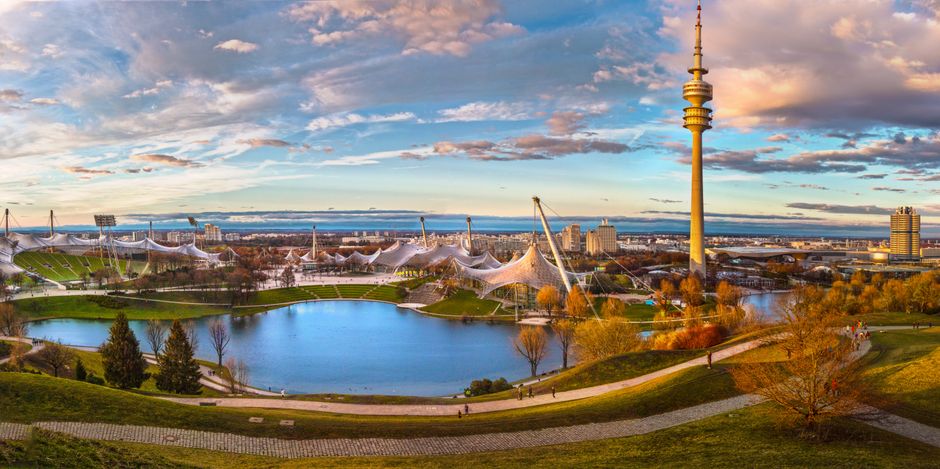
The Olympiapark remains the gravitational center of organized outdoor fitness in Munich. Every Saturday morning through the summer, the Lauftreff Bayern initiative gathers anywhere from 80 to 200 runners at the park's southern entrance on Spiridon-Louis-Ring for paced group runs between 5 and 15 kilometers. Entry is free. The organizers added a six-week team challenge format in May, pairing strangers into groups of four and tracking combined weekly distances on a shared app — a small structural change that participants say transformed the social dynamic entirely.
Down in Haidhausen, the CrossFit box on Rosenheimer Straße runs a quarterly "Munich Open" challenge that draws competitors and first-timers alike. The July edition, scheduled for the weekend of 18–19 July, is structured deliberately to include scaled divisions — meaning someone who has never touched a barbell can stand on the same floor as an experienced athlete. Entry fees run €25 for a single-day pass. The organizers donate 10 percent of proceeds to the Münchner Tafel food bank, threading a social purpose into the physical one.
The Isar riverbanks, particularly the stretch between the Reichenbachbrücke and the Wittelsbacherbrücke in Glockenbachviertel, have become an informal corridor for boot camp groups operating under the Outdoor Fitness München umbrella. The organization runs a summer-long step challenge — 10,000 steps a day minimum, tracked on a group WhatsApp — that had 620 active participants as of June 30th. No equipment, no membership fee. Just a shared target and a chat thread that, participants report, often outlasts the challenge itself.
The Evidence for Exercising in Public
A 2024 study published in the journal Social Science & Medicine found that adults who exercised in organized group settings reported a 22 percent higher sense of community belonging than those who exercised alone, even when total weekly activity was identical. The mechanism is straightforward: shared physical effort creates what psychologists call "non-verbal bonding" — the same process behind team sports, but accessible to people who never played them.
Munich's relatively compact geography helps. The city's U-Bahn puts Olympiapark, the English Garden, and neighborhoods like Schwabing or Neuhausen within 20 minutes of almost anywhere inside the Mittlerer Ring. That accessibility lowers the barrier for someone who might talk themselves out of a 40-minute commute to a group class. The Münchner Volkshochschule, the city's public adult education institution, lists over 60 group fitness courses in its summer 2026 catalog at prices starting from €38 for a six-session block — one of the cheaper structured options in any major European city.
For residents looking to plug in, the Münchner Sportverband maintains an online veranstaltungskalender — an events calendar updated weekly — at their offices on Georg-Brauchle-Ring. The next major entry point is the city's own Stadtradeln cycling challenge, running through August 9th, which invites entire neighborhoods to compete on collective kilometers. Registration is open and free. Bring a bike, find a team, or let the platform match you with one. The challenge does the rest — and so, increasingly, does the city around it.